

Description
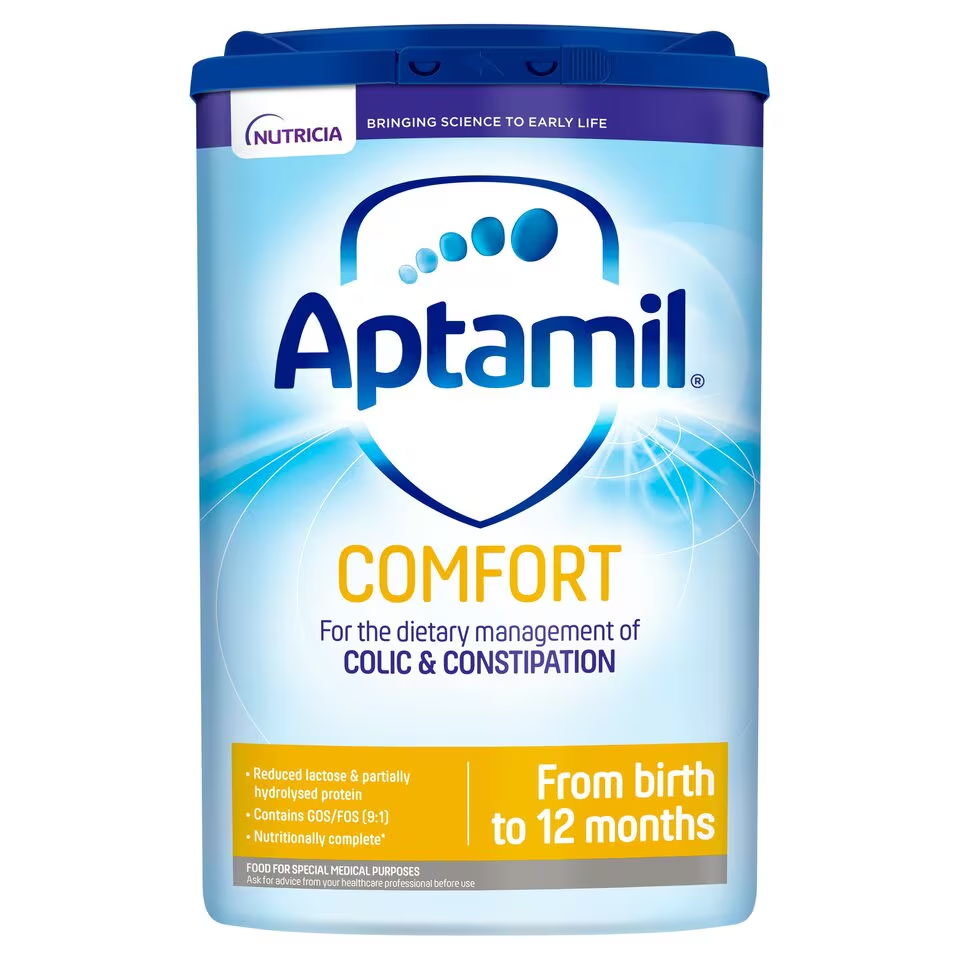
When your baby experiences digestive discomfort, it can be very stressful for both the baby and their parents. Colic, constipation, and bloating can interfere with your baby’s agitated sleep and also make feedings difficult. Aptamil Comfort is a specially formulated milk designed to ease and comfort your baby’s tummy while providing relief to combat digestive issues. Aptamil Comfort is a trusted formula that can help settle and comfort your baby’s tummy, giving relief and ease.
Suitable from birth, Aptamil Comfort is formulated for the dietary management of colic and constipation. If you think your baby has colic or constipation, speak to your health visitor or pharmacist for advice. This product must be used under the supervision of a healthcare professional.
Why Choose Aptamil Comfort for Your Baby?
Aptamil Comfort is a uniquely formulated baby milk designed for babies who suffer from mild digestive discomfort. Its specialized ingredients help to ease common tummy issues like colic and constipation, promoting a more comfortable feeding experience.
Key Benefits of Buy Aptamil Comfort:
Relieves Colic and Constipation: Aptamil Comfort is ideal for babies who experience colic or constipation. Its gentle formula contains partially hydrolyzed protein, making it easier for babies to digest.
Helps with Bloating: Many babies struggle with bloating after feeds, leading to discomfort. Aptamil Comfort helps reduce bloating, allowing your baby to feel more at ease.
Easy-to-Digest Ingredients: This formula is designed to be gentle on your baby’s tummy, promoting better digestion and fewer digestive issues.
Prebiotics for Gut Health: Aptamil Comfort contains prebiotics, which support the development of healthy gut flora. A balanced gut is essential for your baby’s overall well-being.
Suitable for Babies from Birth: Aptamil Comfort can be used from birth onwards, making it an excellent choice for newborns with digestive challenges.
| Typical Values | 100g powder | 100ml prepared feed | ||
|---|---|---|---|---|
| Energy | 2015 | 276 kJ | ||
| – | 482 | 66 kcal | ||
| Fat | 25.0 | 3.4 g | ||
| of which, saturates | 10.6 | 1.4 g | ||
| of which, mono-unsaturates | 10.2 | 1.4 g | ||
| of which, polyunsaturates | 4.2 | 0.6 g | ||
| of which, LCPs† | 0.281 | 0.038 | ||
| acid (AA) | 0.120 | 0.017 g | ||
| acid (DHA) | 0.120 | 0.017 g | ||
| Carbohydrate | 51.1 | 7.0 g | ||
| of which, sugars | 23.8 | 3.3 g | ||
| of which, lactose | 19.7 | 2.7 g | ||
| of which, polyols | 0.115 | 0.016 g | ||
| – Inositol | 0.062 | 0.009 g | ||
| of which, starch | 10.2 | 1.4 g | ||
| Fibre | 4.1 | 0.6 g | ||
| of which, GOS° | 3.5 | 0.48 g | ||
| of which, FOS◊ | 0.58 | 0.08 g | ||
| Protein‡ | 11.1 | 1.5 g | ||
| Salt | 0.51 | 0.07 g | ||
| Vitamin A | 423 | 58 µg | ||
| Vitamin D3 | 12 | 1.7 µg | ||
| Vitamin E | 12 | 1.7 mg TE | ||
| Vitamin K1 | 36 | 4.9 µg | ||
| Vitamin C | 67 | 9.1 mg | ||
| Thiamin (B1) | 0.44 | 0.06 mg | ||
| Riboflavin (B2) | 1.0 | 0.14 mg | ||
| Niacin (B3) | 3.2 | 0.43 mg | ||
| Vitamin B6 | 0.31 | 0.04 mg | ||
| Folate | 102 | 14.0 µg | ||
| Vitamin B12 | 0.60 | 0.08 µg | ||
| Biotin | 12 | 1.7 µg | ||
| Pantothenic acid | 4.2 | 0.57 mg | ||
| Sodium | 204 | 28.0 mg | ||
| Potassium | 590 | 81 mg | ||
| Chloride | 372 | 51 mg | ||
| Calcium | 431 | 59 mg | ||
| Phosphorus | 239 | 33 mg | ||
| Magnesium | 37 | 5.1 mg | ||
| Iron | 5.3 | 0.73 mg | ||
| Zinc | 3.5 | 0.48 mg | ||
| Copper | 0.371 | 0.051 mg | ||
| Manganese | 0.043 | 0.006 mg | ||
| Fluoride | ≤0.043 | ≤0.006 mg | ||
| Selenium | 22 | 3.0 µg | ||
| Chromium | ≤43 | ≤6.0 µg | ||
| Molybdenum | ≤43 | ≤6.0 µg | ||
| Iodine | 92 | 13 µg | ||
| L-Carnitine | 15 | 2.1 mg | ||
| Choline | 182 | 25 mg | ||
| Taurine | 39 | 5.4 mg | ||
| Non-caloric carbohydrate (GOS°) | 1.7 | 0.2 g | ||
| Nucleotides | 17 | 2.3 mg | ||
| Osmolarity | 230 mOsmol/l | 260 mOsmol/kg H20 | ||
| – Arachidonic | – | – | ||
| – Docosahexaenoic | – | – | ||
| Vitamins | – | – | ||
| Minerals | – | – | ||
| Others | – | – | ||
| † Long-chain polyunsaturated fatty acids | – | – | ||
| ° Galacto-oligosaccharides | – | – | ||
| ◊ Fructo-oligosaccharides | – | – | ||
| ‡ Partially hydrolysed cow’s milk protein | – | – |
FAQs
What is Aptamil Comfort used for?
Aptamil Comfort supports baby feeding, and is effective in relieving baby colic, constipation, bloating and mild digestive problems.
Is Aptamil Comfort suitable for newborn babies?
Yes, Aptamil Comfort may be fed to a baby from birth after a health care professional has evaluated the baby’s feeding requirements.
Does Aptamil Comfort help with colic and constipation?
Yes, Aptamil Comfort is designed to aid in the relief of infants suffering from constipation and colic symptoms, by softening stools and making them easier to pass.
How does Aptamil Comfort support digestion in babies?
Aptamil Comfort also contains partially hydrolyzed protein which is more easily absorbed and prebiotics to keep the intestines healthy.
Do I need medical advice before using Aptamil Comfort?
Of course, you should always consult a doctor, pharmacist or health visitor before taking Aptamil Comfort, particularly if your baby or newborn has medical sensitivities.